
Brain Cancer: Symptoms, Causes, Types, Diagnosis and Treatment
Brain cancers form malignant cells that can migrate from one place to another. Types of brain cancer and symptoms of brain cancer can help in the diagnosis of brain cancer causes and risk factors and treatment. In this article, we will talk about brain cancer from the beginning of its formation to its medication. These are the points we will include in the article:
What is brain cancer?
Brain cancer means the proliferation of abnormal cells in brain tissue.
Although it is customary to name such tumors with a generic and comprehensive name “brain tumors”, not all tumors that originate in the brain are necessarily carcinomas.
Therefore, the term “brain cancer” used to denote malignant tumors only.
Types of tumors
Malignant and benign tumors:
Benign or malignant tumors may appear in the brain.
Malignant tumors: grow and spread in a violent manner, with tight control of healthy cell tissues and by occupying certain areas, as well as the use of blood supplies and nutrients prepared for normal and healthy tissues (just as other cells of the body, so do cancer cells also need a supply of blood and materials Survival feeder).
Benign tumors: Tumors that do not spread in a violent manner that called “benign tumors”.
A benign tumor is, in general, less dangerous than a malignant tumor. But an adenoma, too, may lead to problems in the brain.
Primary and secondary brain tumors
Primary brain tumors
The brain is made up of many different types of cells.
Some carcinomas in the brain arise when a certain type of cell deviates from its usual characteristics. In such a case, when such an anomaly occurs, the cell grows, in its new form, and multiplies abnormally.
When these abnormal cells grow, they turn into a lump or tumor.
Brain tumors that arise as a result of a change in shape and an irregularity (anomaly) in growth that called “primary brain tumors” because their source is brain tissue.
The most common primary brain tumors are:
- Glioma
- Meningioma
- Pituitary adenoma
- Neuromas
- Primitive neuroectodermal tumors / Medulloblastomas.
- The term “Glioma” also includes Astrocytoma, Oligodendroglioma,Ependymoma, and Papilloma of choroid plex.
The names of these tumors have their origin in the type of brain cells in which the tumor began to develop.
Secondary brain tumor
Metastases from in the brain
Metastases in the brain consist of cancer cells that originate in another part of the body. These cancer cells (malignant cells) arrived (spread) to the brain causing brain cancer. This process calls metastasis.
About 25% of all tumors that originate elsewhere in the body send metastases to the brain.
Symptoms of brain cancer
Not all brain cancer in brain cause symptoms (for example, carcinomas in the pituitary gland), and some are only detected upon autopsy.
The symptoms of brain cancer that can indicate a brain tumor are many and varied, but they are not characteristic of brain tumors only.
This means that the same symptoms may appear as a result of other diseases. The only way to verify with certainty the true cause of brain cancer symptoms is to undergo a series of diagnostic procedures and a number of tests.
- Some of the symptoms of brain cancer may result from the fact that the tumor puts pressure on other parts of the brain, or penetrates them, preventing it from performing its functions properly.
- Other symptoms may result from swelling that occurs in the brain as a result of the tumor, or as a result of inflammation (infection) that may arise around the tumor.
- Symptoms that indicate a tumor that may develop as a result of a malignant, or a primary tumor, are the same.
The most common symptoms
The symptoms listed below are the most common symptoms of brain cancer:
- Headache
- Weakness and emaciation
- Motion blur
- Difficulty walking
- Seizures of convulsions
Less common symptoms of brain cancer include:
- A change in perceptual (mental) state
- Feeling sick and vomiting
- Changes in vision (Sight)
- Difficulty speaking
Gradual changes in the mental ability or emotional perception
The symptoms of brain cancer mentioned above appear, in the vast majority of people who develop brain cancer, very gradually, to the point that the patient himself, or those around him, may notice them at the beginning. However, brain cancer symptoms sometimes appear at a rapid pace.
In some cases, a person with brain cancer may act as if they have had a stroke.
Causes and risk factors of brain cancer
As is the case for some carcinomas that arise in other places of the body, the exact causes of brain cancer for the formation of carcinomas in the brain is still unknown, too.
It shows that there are many causes related to the emergence of brain cancer, including certain genetic factors, environmental pollution, radiation, and cigarette smoking, but it is not possible, in most cases, to indicate a specific factor as responsible for the growth of brain cancer.
It turns out that the following factors, all of them, are related to the development of brain cancer and identified as potential risk factors for developing brain cancer. However, no one knows for sure whether these factors actually increase the risk of developing brain cancer:
- Exposure to radiation in the head area
- Certain genetic factors
- Carry the “AIDS” virus
Diagnosing of brain cancer
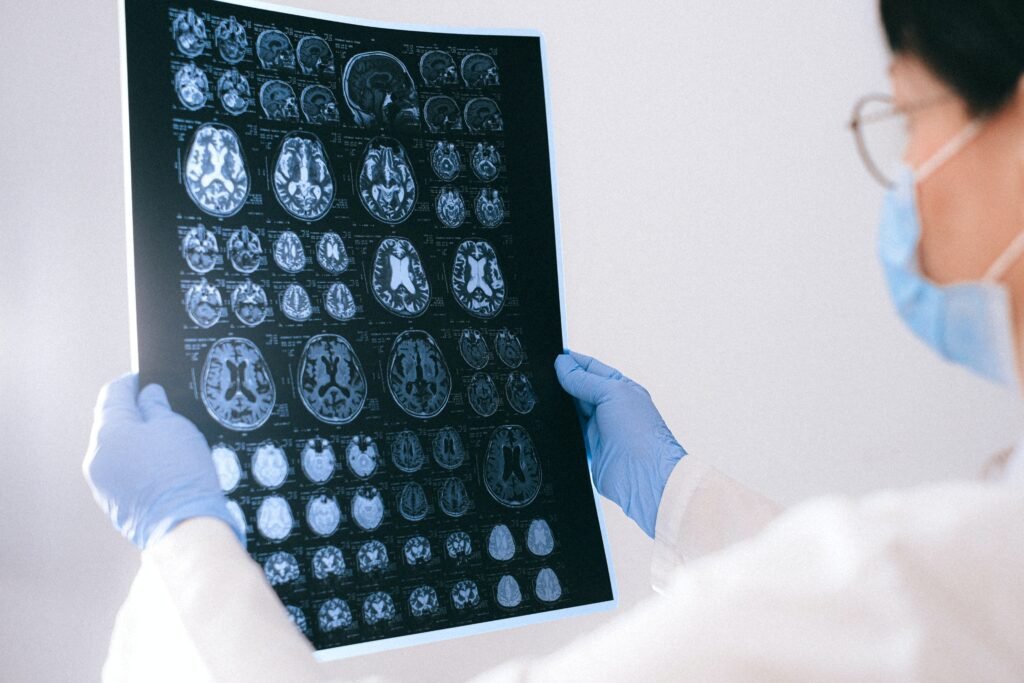
In most cases, a CT scan (computed tomography) of the brain perform. This test is similar to x-ray imaging, but it provides very detailed information, using 3D imaging.
More and more check-ups magnetic resonance imaging (MRI) are being done, instead of a CT scan for brain cancer.
People who develop brain cancer often suffer from other diseases, and so they undergo some routine laboratory tests.
These tests include blood tests, electrolytes, and tests for liver function and blood clotting status. The patient has mental changes as the main symptom, blood, and urine tests may perform to clarify medicine or drug use.
If the scans show the presence of a brain tumor, the patient is directed to continue treatment with a cancer specialist (Oncologist). If a Neuro-oncologist is found in the patient’s area of residence, he or she will likely direct to continue treatment.
Brain tumor biopsy
Then the next step is to confirm the diagnosis of brain cancer, in fact: a small sample (biopsy) of the lump to determine the type of tumor.
Usually, the procedure to obtain a sample from the lump is by surgery. An opening is made in the skull, in order to remove the entire tumor, usually within the framework of the same operation. Then a sample (biopsy) is taken from the lump for examination in the laboratory.
If the surgeon is unable to completely remove the tumor during surgery, only a sample of the tumor is taken for laboratory examination.
In some cases, it may be possible to extract a portion of the tumor tissue for examination without opening the skull. The precise location of the tumor in the brain is determined by stereotactic imaging which is using CT and MRI techniques while the head is held in a frame.
Next, a small hole is drilled in the skull bone and a needle is then inserted through it into the tumor. And by means of the needle, the sample required to perform the biopsy is captured and extracted. This method known as stereotactic biopsy or stereotactic.
Then, the sample examins under a microscope by a pathologist – a doctor who specializes in diagnosing diseases by examining cells and tissues.
Brain cancer treatment
An overview of brain cancer treatment:
Treatment for brain cancer is usually a complex process. Most treatment programs require consultation with a number of physicians.
Therefore, the medical treating team usually includes neurosurgeons (doctors specializing in neurosurgery), oncologists, radiation oncologists (specialists in radiation therapy).
In addition to them, the staff also includes a social worker, a specialist physician in the field of Psychiatrist, and possibly others, as well, who are physicians specializing in other fields.
The treatment program is usually subject to modification and change according to the location of the tumor, its size and type, and according to the age of the patient and other diseases that he is likely to suffer from.
Common treatment methods
The most common treatment methods for brain cancer are:
- Surgical treatment
- Radiation therapy
- Chemical treatment
The treatment program may include, in some cases, more than one treatment method that combine, together, at the same time.
Conclusion
Brain cancer is serious, and early detection matters. Malignant tumors can start in the brain or spread from elsewhere in the body, and the tumor’s type, location, and size shape the treatment plan.
Brain cancer symptoms include persistent headaches, seizures, blurred vision, difficulty walking, nausea, and changes in speech or behavior. They often appear gradually. Many other conditions cause the same symptoms, so none of them confirms a tumor on its own. Only imaging such as a CT or MRI scan, followed by a biopsy, can identify the cause.
Treatment usually combines surgery, radiation therapy, and chemotherapy, guided by a team of specialists that includes neurosurgeons and oncologists. The earlier the tumor found, the more options that team has.
If you or someone close to you has new or worsening symptoms, especially headaches that feel different from usual or sudden seizures, see a doctor as soon as possible. This article is for general information only and is not a substitute for professional medical advice.
Read more: